The True Cost of Starting an Eyewear Line (And How to Cut It by 70%)
Every eyewear founder remembers the moment excitement turns into hesitation: the moment you see the first quote from a manufacturer.
You have the vision. You have the name, the logo, maybe even a few sketches. But then the numbers arrive. $15,000. $20,000. Sometimes more. And suddenly, launching your brand feels less like a creative adventure and more like a financial gamble.
The truth is, most aspiring eyewear brands never make it past this stage — not because the idea wasn't good, but because traditional manufacturing was built for large players, not for independent founders. This article breaks down exactly where those costs go, and how a smarter approach can reduce your initial investment by up to 70%.

The Cost Breakdown You Don't See Coming
When a traditional manufacturer quotes you a price per frame, that number hides a complex structure of upfront costs that most new founders don't anticipate.
The Mold & Tooling Trap
Unlike off-the-shelf products, eyewear often requires custom tooling. Here's where the costs add up:
- Special hinge designs — unique barrel hinges or spring mechanisms require custom molds
- Custom acetate temples — non-standard shapes or thicknesses need new tooling
- Injection molds for new frames — any original plastic frame design requires its own mold
- Novel temple profiles — unique shapes or wire cores add development fees
- Specialty components — custom nose pads, metal plaques, or branded end pieces
- Metal core forms — unique wire shapes for acetate temples require separate tooling
Each of these can cost $500–$3,000 in mold fees — before you've produced a single frame.
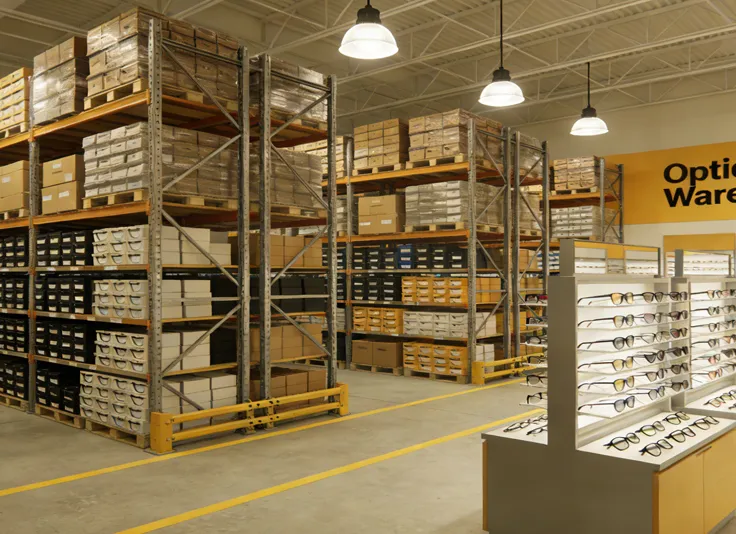
Beyond tooling, traditional manufacturers require high minimum order quantities — typically 300–500 pieces per style. Launch with 6 styles, and you're ordering 1,800–3,000 frames before knowing what sells. Add 90–120 days of production time, and you've tied up $20,000+ in inventory you can't touch for months.
Why Traditional Costing Fails New Brands
The fundamental problem isn't the quality of manufacturing — it's the mismatch between how factories operate and how new brands learn.
No Sales Data
You're guessing which styles will sell
Long Lead Times
4 months before you see product
Dead Stock Risk
Uncertain styles become discounted inventory
The result is a vicious cycle: invest heavily → wait months → discover which styles work → but now you're out of cash and stuck with unsold inventory. Many brands never recover.
The Hybrid Model: Cut Initial Cost by 70%
A growing number of independent brands are adopting a different approach — one that keeps the flexibility of ready-stock while preserving the ability to build a unique brand identity.
| Traditional Model | Hybrid Model | |
|---|---|---|
| Initial Investment | $15,000 – $30,000+ | $2,000 – $5,000 |
| MOQ per Style | 300–500 pieces | Mix any styles, 20–50 total |
| Mold & Tooling Fees | $500–$3,000 per new element | $0 — start from proven bases |
| Production Lead Time | 12–16 weeks | 10–13 weeks (predictable) |
| Cash Flow Cycle | 4–6 months to replenish | 3–4 months, reorder only bestsellers |
Here's how the hybrid model achieves these savings without sacrificing your ability to build a distinct brand:
With this model, your initial capital is deployed into selling, not speculating. Instead of funding 10 styles and hoping 3 succeed, you fund a test collection, let your customers choose the winners, and scale those with confidence.
What 70% Less Initial Investment Looks Like
Let's put numbers on it. A traditional launch might look like this:
Traditional Approach
- 6 styles × 300 pieces = 1,800 frames
- Mold/tooling fees: $2,500–$5,000
- Production + shipping: $18,000–$25,000
- Total capital locked: $20,000–$30,000
- Time to revenue: 4–5 months
Hybrid Model
- Mix any styles, 150 pieces total
- No mold or tooling fees
- Production + branding: $2,000–$5,000
- Total capital locked: $2,000–$5,000
- Time to revenue: 10–13 weeks + sell-through
The difference: $15,000–$25,000 in preserved cash — capital that can be used for marketing, better packaging, or simply kept as a safety reserve.
Start Smarter. Scale Confidently.
You don't need to gamble with your savings to build an eyewear brand. The hybrid model lets you test, learn, and grow — without betting on guesswork.
See the hybrid model in action
Get pricing, styles, and starter strategy — no spam, just what you need to start.